
Class Ae 3/5 electric loco
The class Ae 3/5 - the little Sécheron
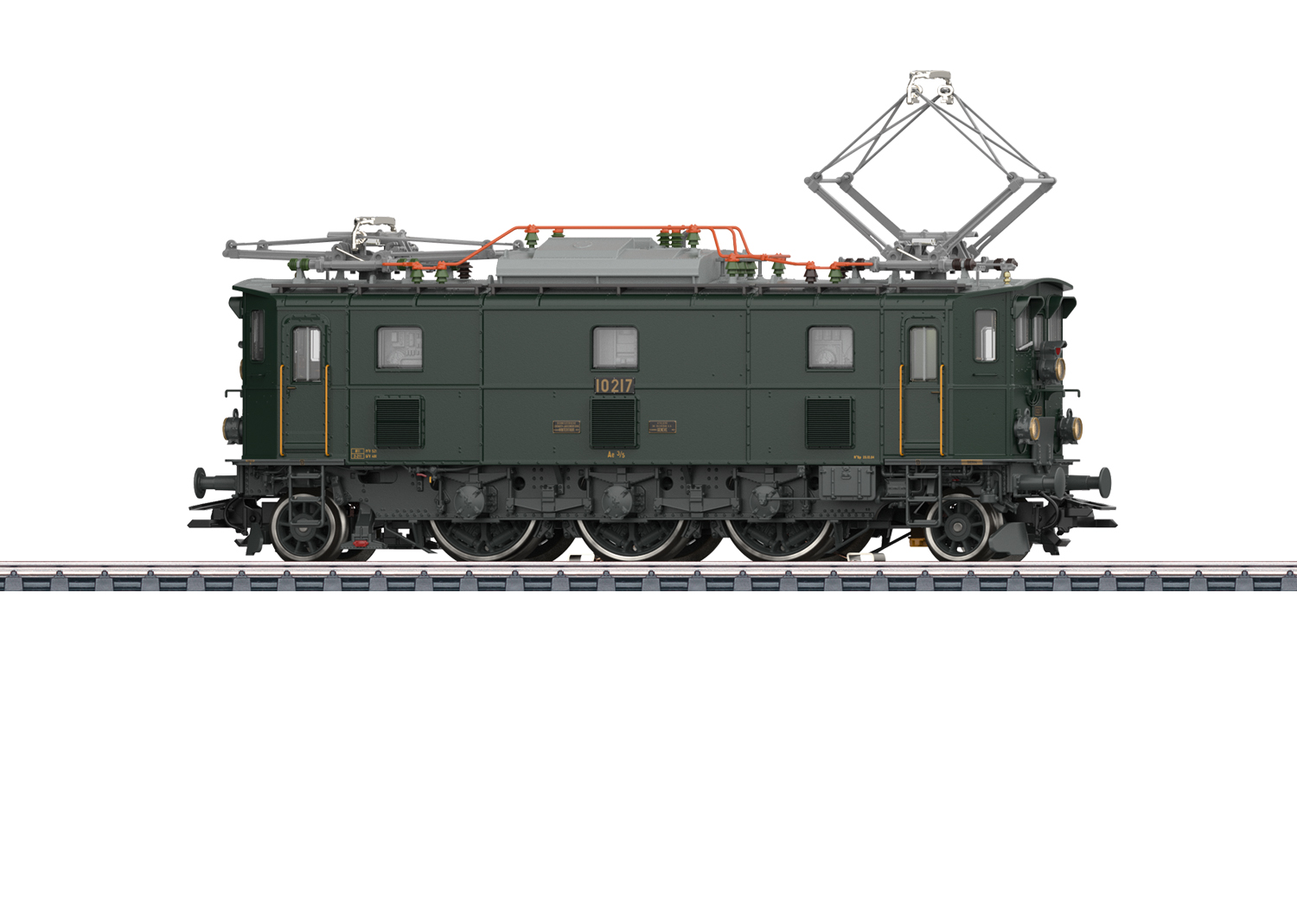
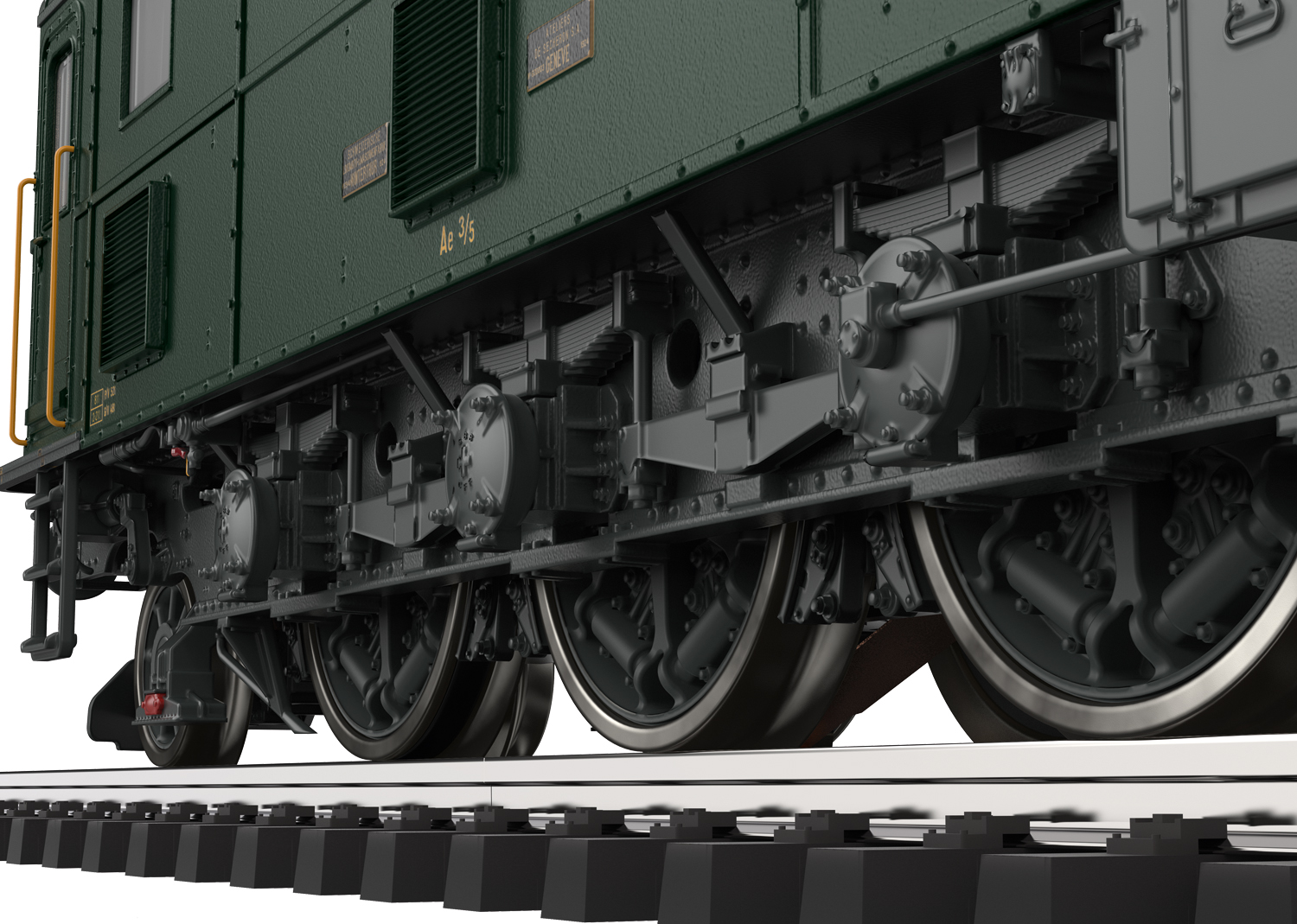
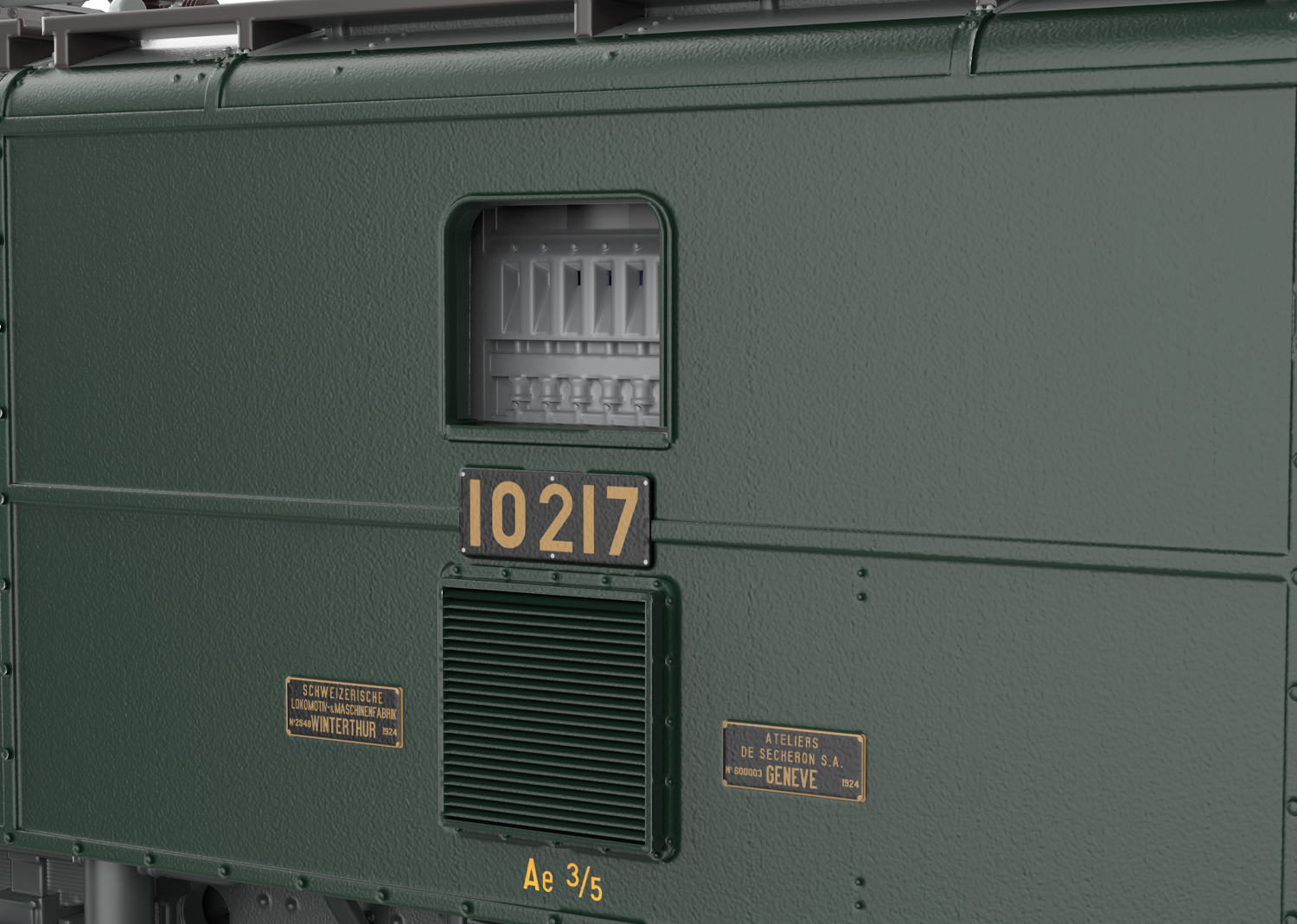
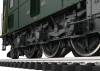
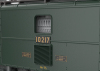
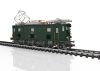
Despite seeming at first glance to suggest something more exotic, “little Sécheron” is not a painting by Picasso, but merely an affectionate nickname for a Swiss loco that was intended to usher in a new era of rail in the Swiss Confederation. Electric traction throughout the land was the order of the day following the First World War. In this context, single-frame construction and single-axle drive systems were the magic formula for the new age of electrification on the lowland routes of the Swiss Federal Railways (SBB). The type Ae 3/5, which was built from 1922 onwards, appeared unusually compact with its three driving axles and two running axles but generated no less than 1,775 horsepower – an impressive figure at the time. What’s more, the minimalist design had an air of unusual sophistication. Consequently, the class Ae 3/5 quickly acquired its nickname – inspired by the Geneva-based company Sécheron, which supplied the electrical components. The class Ae 3/5, road number 10217, remains immaculately preserved as a fully functional little gem at the train depot in Olten. This elegant machine served as the prototype for the wonderful new Märklin model of this loco type, which also possesses truly rustic charm in 1:87 scale.
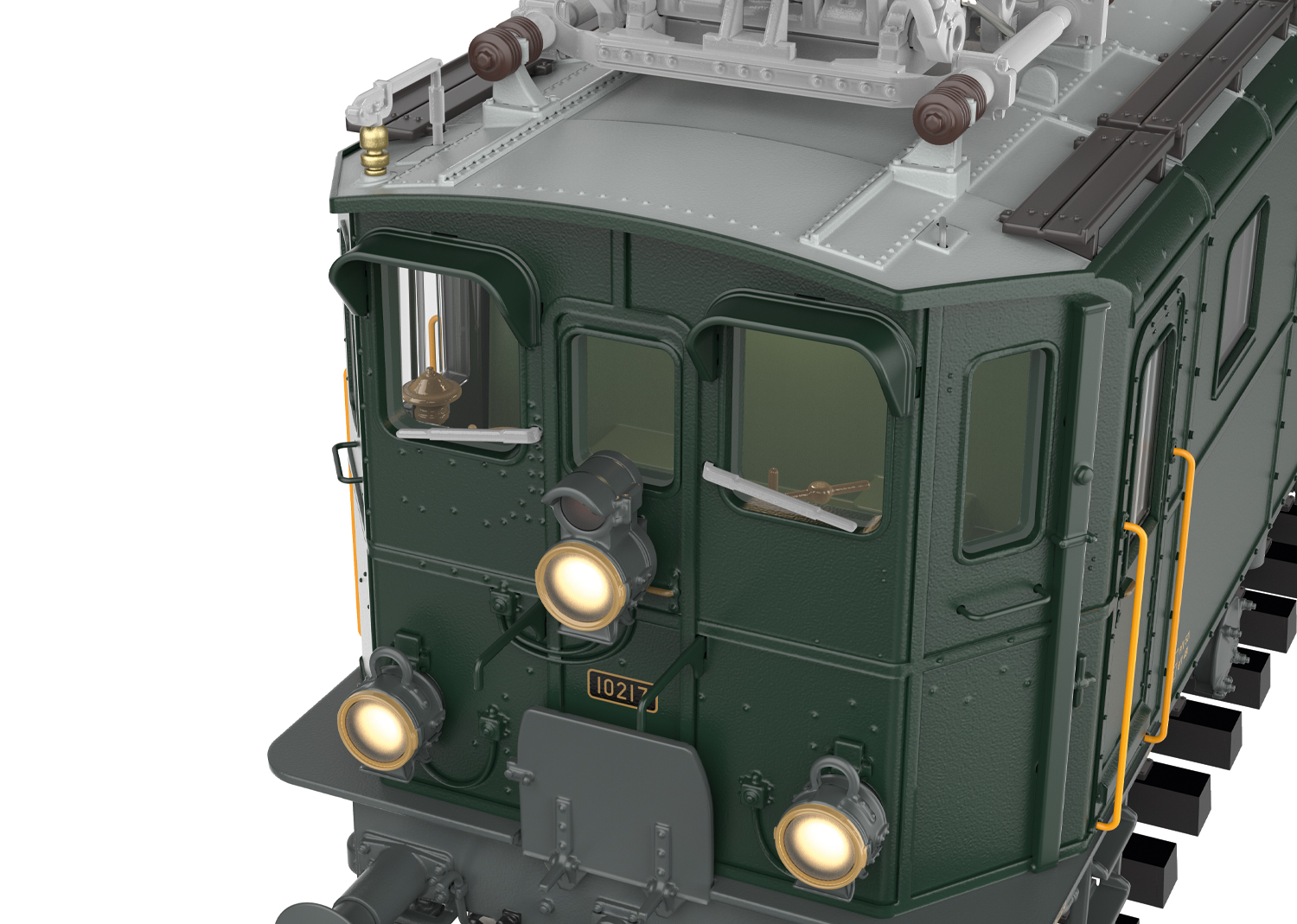
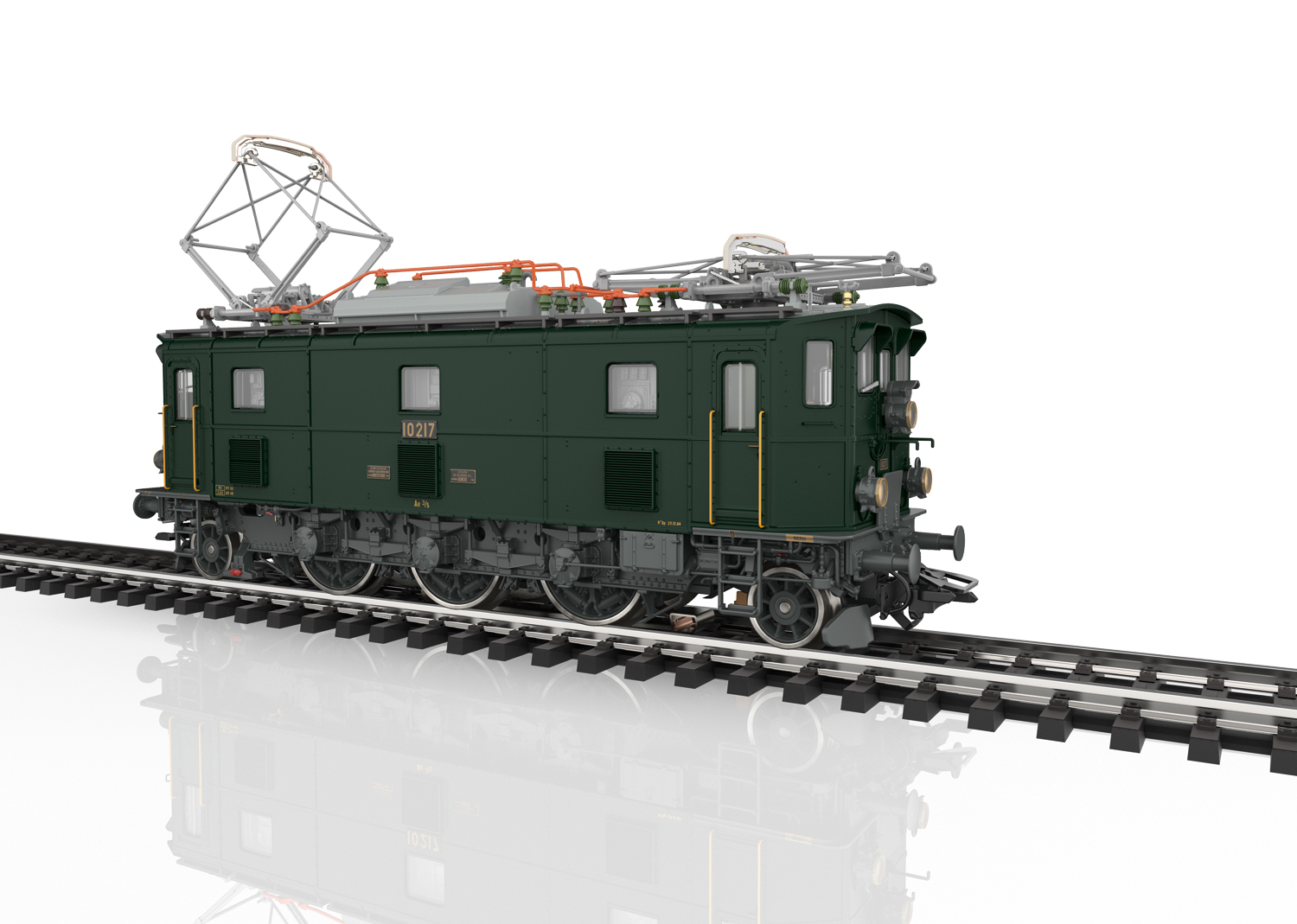
Prototype: Swiss Federal Railways (SBB/CFF/FFS) class Ae 3/5 electric locomotive. With crossover plates on the ends and an oncoming train light above the upper headlight. Fir green basic paint scheme with gray running gear. Locomotive road number 10217. The locomotive looks as it did in 2022.
Most Important Facts
| Article No. | 38350 |
|---|---|
| Gauge / Design type | H0 / 1:87 |
| Era | VI |
| Kind | Electric Locomotives |
Highlights
- Completely new tooling.
- Highly detailed metal construction.
- World of Operation mfx+ decoder with extensive light and sound functions.
- The lighting for the cab, control desk, and machine room is digitally controllable.
- Flashes from the relay are digitally controllable.
- With buffer capacitor to bridge short unpowered sections of track.
- Buffer height conforms to NEM.
-
Product description
Model: With mfx+ digital decoder and extensive operating and sound functions. Controlled high-performance motor with a flywheel. One axle driven. Traction tires. The triple headlights and one white marker light (Swiss headlight/marker light code) change over with the direction of travel, will work in conventional operation, and can be controlled digitally. When the locomotive is running “light,” the lighting can be changed to one red marker light. The oncoming train light can be separately controlled in digital operation. The headlights at no. 1 and no. 2 ends can be turned off separately in digital operation. There is a double “A” light function. There is also lighting for the cab and control desk, a flashing effect for the relay, and machine room lighting, each of which can be controlled separately in digital operation. Maintenance-free warm white and red LEDs are used for the lighting. A buffer capacitor is included. The locomotive features highly detailed metal construction with many separately applied details. The cabs and machine room have interior details. The loco features detailed roof equipment with roof conductors, insulators, and roof catwalks, as well as scissor pantographs. The minimum radius for operation is 360 mm / 14-3/16". Brake hoses and imitation screw couplers are included.
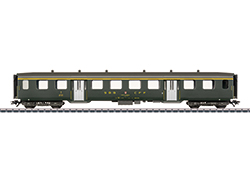
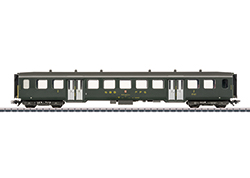
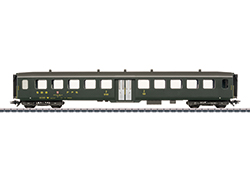
Length over buffers approximately 12.8 cm / 5-1/32".You can find matching passenger cars in the Märklin H0 range as items 43363, 43373, and 43383. You can find a DC version of this model in the Trix H0 range as item 25350.
Find more Märklin explanation videos on our YouTube Channel
Spare parts for our articles can be found here in our spare parts search.
-
Publications
- New items brochure 2026
-
Prototype information
Switzerland is renowned for its railroads and was certainly one of the pioneers when it came to electrifying its railroad lines. Although considered ultra-modern at the time, this traction type was confined to branch lines, the Simplon Tunnel, and the Bern-Lötschberg-Simplon Railroad up until the First World War, when Switzerland suffered greatly due to the scarcity of coal since most of the “black gold” required for steam traction had to be imported from abroad. Consequently, a decision was taken in 1918 to electrify the Swiss Federal Railways (SBB) route network, because the country had abundant supplies of hydroelectric power. In 1920, at the start of the first electrification phase, the SBB commissioned the three Swiss electrical companies Brown, Boveri & Cie (BBC), Maschinenfabrik Oerlikon (MFO), and Société Anonyme des Ateliers de Sécheron (SAAS) to develop designs for general-purpose locos that could be used on flat terrain. Unlike the side-rod drive system that had been carried over from steam loco engineering and used on most electric locos at the time, BBC and SAAS opted for single-frame locos equipped with single-axle drive systems. This groundbreaking and far more efficient drive technology had been developed by the US company Westinghouse and others from 1912 onwards for use in large locomotives. In 1918, BBC had also unveiled its equally reliable Buchli drive. For its new electric locomotive design for the SBB, SAAS acquired a license from Westinghouse. The result was an extremely compact and comparatively lightweight machine that still offered the required three driving axles and an output of at least 1,775 hp, giving a top speed of 90 km/h / 56 mph. Due to the lightweight drive, only one pilot and one trailing axle were required. The SBB ultimately ordered 26 units, which it classified as the Ae 3/5. The letter “A” stands for a standard-gauge loco with a top speed in excess of 80 km/h / 50 mph, the letter “e” stands for electric drive, while the number “3” indicates three powered axles and the number “5” the total number of axles. The machines delivered up to 1926 initially failed to live up to expectations. Although very modern in principle, the drive concept was not really suitable to run on a permanent way built during the age of steam. It was prone to squealing and creaking, particularly on curves, and damage to the running gear was commonplace. When it was time to place additional orders, the SBB therefore opted for the class Ae 3/6 I loco developed by BBC and equipped with the Buchli drive, which was not only more reliable but also more powerful and faster. As work on overhauling and upgrading the route network progressed, the class Ae 3/5 locos were finally able to run to the satisfaction of railroader operators, who soon referred to the compact locos as “petite Sécherons” or “little Sécherons.” Some local patriotism may also have played a role here, as the machines were mainly used in their home region of western Switzerland. Nevertheless, the class Ae 3/5 locos remained in regular operation until the early 1980s, a remarkable achievement. The class Ae 3/5 loco, road number 10217, has been preserved as an operational loco under the care of the SBB Historic foundation and is maintained at the train depot in Olten.
-
Digital Functions
Control Unit Mobile Station Mobile Station 2 Central Station 1/2 Central Station 3/2*
Mobile Station 2**Headlight(s) Marker light(s) Electric locomotive op. sounds Locomotive whistle Engine room lighting Direct control Headlights locomotive end 2 off Whistle for switching maneuver Headlights locomotive end 1 off Sound of squealing brakes off Engineer’s cab lighting Engineer’s cab lighting Blower motors Letting off Air Light Function – Swiss oncoming train light Control desk lighting Compressor Conductor's Whistle Sanding Switching maneuver Operating sounds Sound of Couplers Engaging Sound of uncoupling Opening cab door Pantograph Sounds Rail Joints Buffer to buffer Light Function * New features of the Central Station 2 (Part No. 60213, 60214 or 60215) with the software update 4.2
** New features of the Mobile Station 2 (Part No. 60657/66955) with the Software Update 3.55
Warning
ATTENTION: not for children under 15 years